How I Built A Game About Real Players Without A Licensing Nightmare
Facts are not copyrightable. Here is the practical line a solo developer can walk to ship a game using real names, positions, and years, with freely licensed faces.
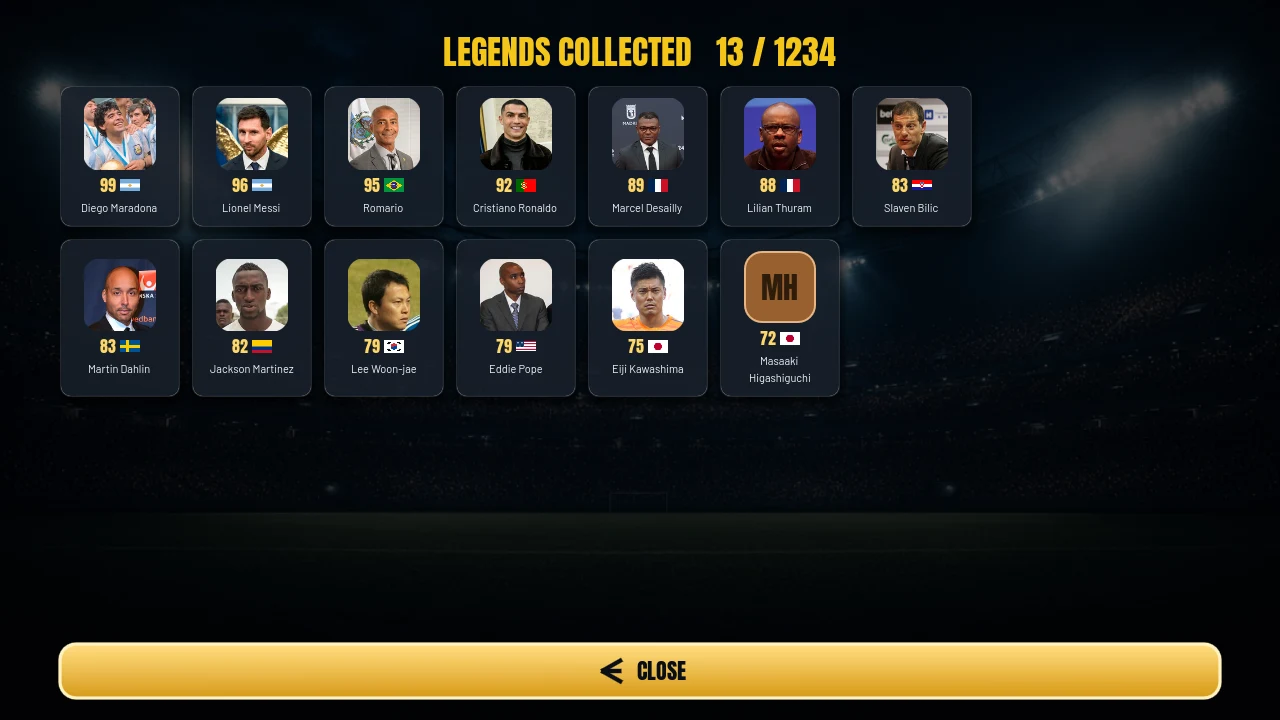
World 11 is a game about real footballers. You spin a real nation and a real year, you see the actual squad that played that World Cup, and you draft real names into your eleven. The obvious question, the one a few people asked the moment they saw it, is how a solo developer ships something like that without a stack of licensing agreements he could never afford.
The answer is that I was careful about the difference between facts and assets, and I stayed on the safe side of that line on purpose. This is the practical version of what I learned, written for the next solo developer who wants to build on real-world data without walking into a wall.
Play World 11 in your browser, or read the overview of how the whole game was built for the wider tour.
Facts Are Not Copyrightable
This is the foundation, and it is worth saying plainly. Copyright protects creative expression. It does not protect facts.
The name of a player who appeared at a World Cup is a fact, and so is the position he played and the year he played it. A rating I calculated myself from those facts is my own work. None of that is a creative work owned by someone else, so none of it carries the licensing weight that a logo or a song or a kit design would.
World 11 ships 58 real squads, somewhere around 1,281 players, spanning 1966 to 2022, every confederation. For each player I store a name, a position, and a calibrated rating. That is the entire data layer, and every piece of it is factual or computed by me. There is no scraped media in the data, no club crests, no league marks, no broadcaster assets. Names, positions, and years are facts, and facts are not copyrightable, so structured squads are exactly the part you are allowed to use.
That single principle is what makes a game like this possible for one person. The history is open. You are allowed to build on the history.
Where The Trouble Actually Lives
The trouble in a game about real people is not the data. It is the pictures.
A player's face is a photograph, and a photograph is a creative work with an owner and a license. This is the exact spot where a hobby project quietly turns into an infringement project, because it is so easy to grab an image from a search result and drop it in. It looks great and it is not yours to use.
So I drew a hard rule before I touched a single face. Every image in World 11 comes from a freely licensed source, and the only acceptable licenses are CC0, CC-BY, CC-BY-SA, and outright public domain. Nothing else gets in. I pulled faces from Wikipedia and Wikimedia Commons, checked the license on each one, and rejected anything that did not fall into those four buckets, no matter how perfect it looked.
That rule cost me coverage, and I accepted the cost. About 85 percent of the unique players in the game have a real photographed face. The rest do not, because no freely licensed image existed for them, and I was not willing to bend the rule to close the gap. A great picture under the wrong license is worse than no picture, because it is the one thing that can actually get a project taken down.
The Fallback That Keeps The Game Whole
A rule that strict leaves holes, and holes look bad in a draft game where the reveal is half the fun. So the fallback had to feel intentional rather than like a missing asset.
When a player has no freely licensed face, World 11 draws a kit badge with his initials instead. It carries the nation's kit colors, so the slot still reads as a member of that squad, and it sits comfortably next to the players who do have photos. Nobody looks at the board and sees a broken image. They see a stylized badge, and the run keeps its rhythm.
The same approach covers the nations themselves. I do not use official crests or licensed kit graphics. Nations are represented by their kit colors and their flags, both of which I can use freely, and the visual identity holds together from those alone. The game looks like football without borrowing anyone's trademarked look.
Credit Everything You Use
There is one more obligation that is easy to skip and important not to. Most of the open licenses I relied on, CC-BY and CC-BY-SA in particular, require attribution. You are allowed to use the image, but you have to credit the source.
So World 11 ships with an attribution file. Every freely licensed image that made it into the game is credited there, by source, so the license terms are honored and anyone can trace where a face came from. This is not a legal formality I resent. It is the deal. The images are free to use because the licenses are generous, and the small price of that generosity is a line of credit. Pay it.
The Line A Solo Developer Should Walk
Put together, the rule is simple enough to keep in your head while you work.
Use the facts freely, because facts are not owned by anyone. Names, positions, dates, statistics, and anything you compute yourself are fair game, and they are usually the part that makes a project like this interesting.
Treat every piece of media as owned until a license tells you otherwise. Source images only from places that publish under licenses you can actually read and rely on, hold to a short whitelist of those licenses, and reject anything outside it even when it hurts your coverage. Build a fallback so the holes do not look like bugs. Credit what you use.
I am not a lawyer, and this is how I chose to build my own game rather than legal advice for yours. But the spirit of it has kept me comfortable shipping a game full of real history. The facts carry the game, freely licensed art fills it in, a colored badge covers the rest, and an attribution file keeps the whole thing honest.
You can build on the real world as a solo developer. You just have to know which parts of the real world are open, and stay disciplined about the parts that are not.
World 11 is free to play in your browser. Spin a nation, draft a squad of real legends across the decades, and if you spot a player who deserves a real face I might have missed, there is a feedback button right on the page. Play it at games.kevingabeci.com/world-11.
Like this? You'll like what I'm building too.
Two ways to support and get more of this work.
HEARTH
A privacy-first Life OS for your desktop. Journal, tasks, and notes that stay on your machine. Coming soon, direct download from this site.
Read moreMY TOOLKITS
Receipts-first toolkits for shipping after hours, building Claude agents, publishing on Amazon, and more. The exact methods I used, not theory.
Browse on WhopRelated Articles
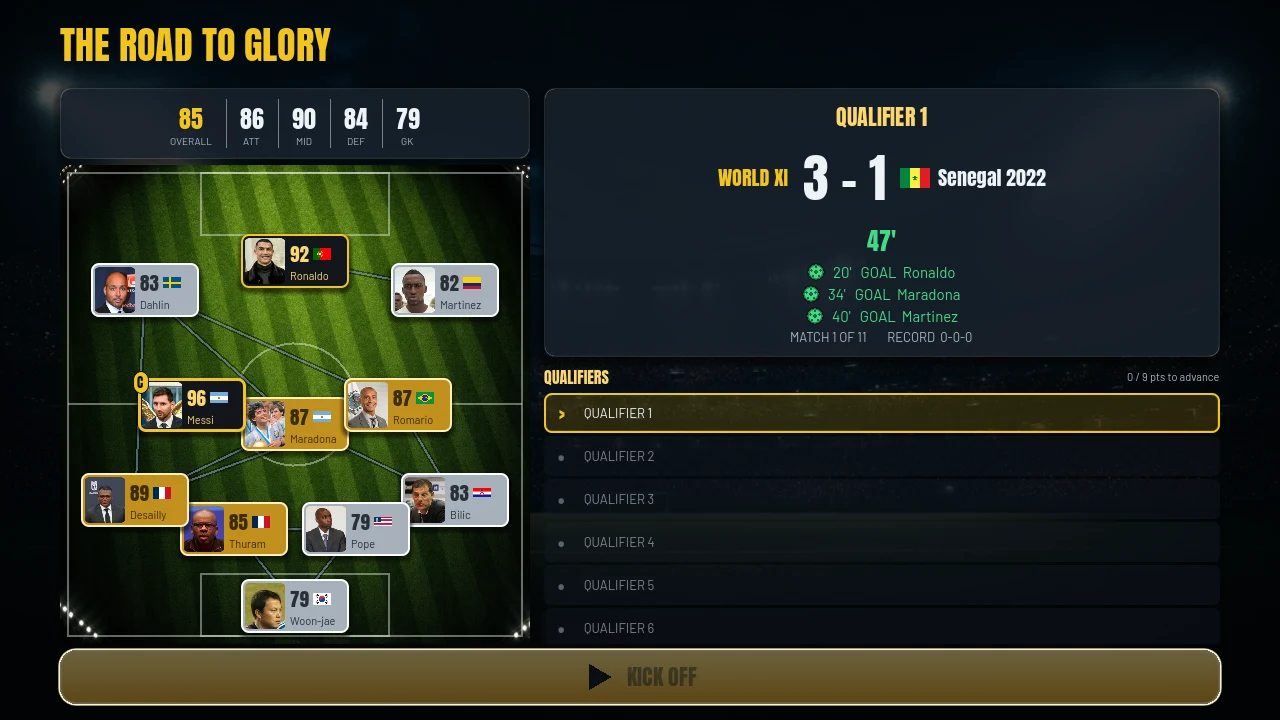
I Balanced My Roguelike With A Bot That Plays A Thousand Games
A balance bot runs hundreds of optimal teams through the full gauntlet and reports the champion rate. That dial replaced the playtest team a solo developer does not have.

I Treat Claude Code Like a Small Dev Team
Agentic AI coding gives real leverage only when you decompose work, isolate it, anchor it with durable context, and verify the output. Here is how I direct it.

Published In The Database Is Not Live On The Internet
I built a small content registry that scans every blog and verifies each post is actually reachable and in the sitemap, not just marked published in a row somewhere.