Designing The Chemistry System That Turns A Draft Into A Decision
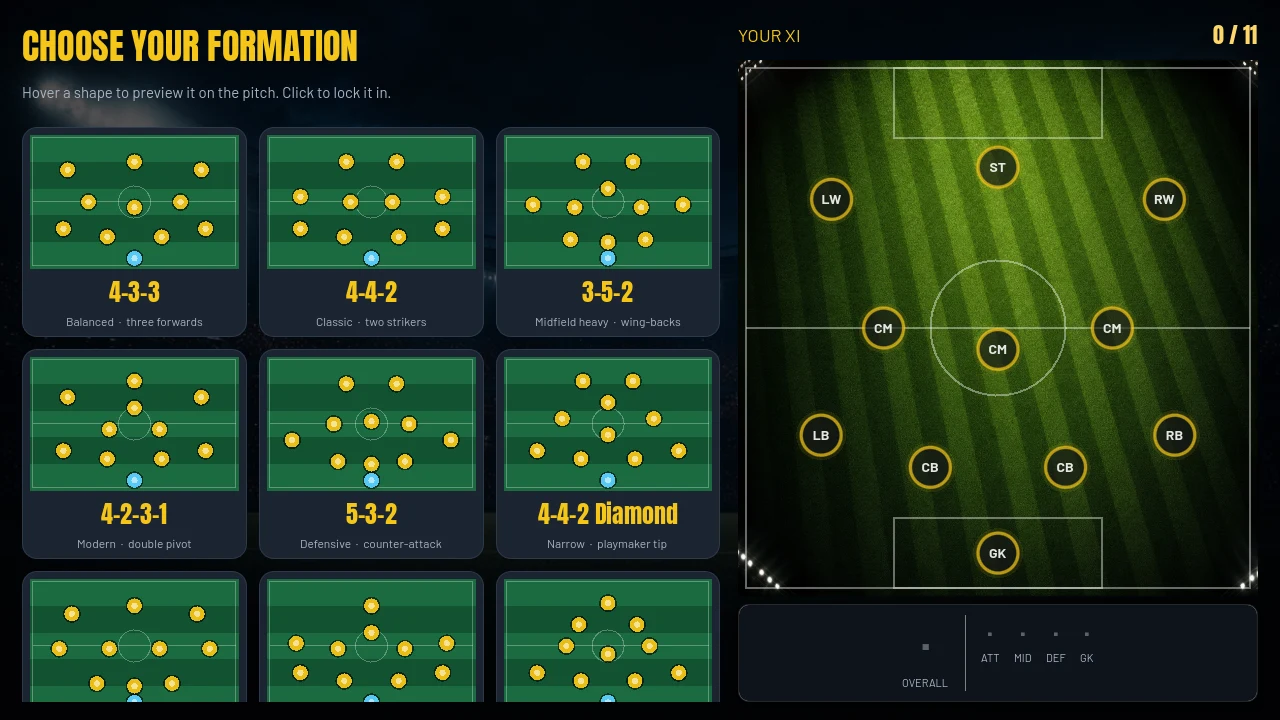
Same-nation and same-decade bonuses make World 11 a real draft. Here is how chemistry sets up the tug of war between the obvious star and the player who fits.
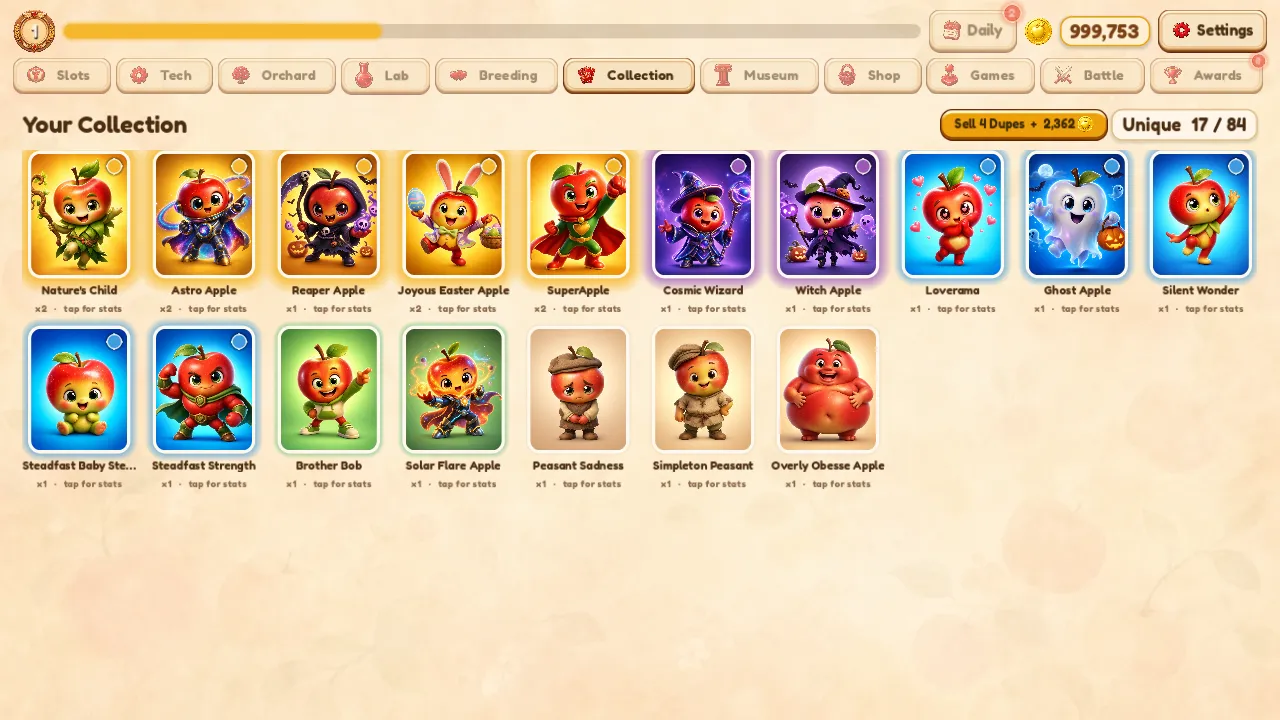
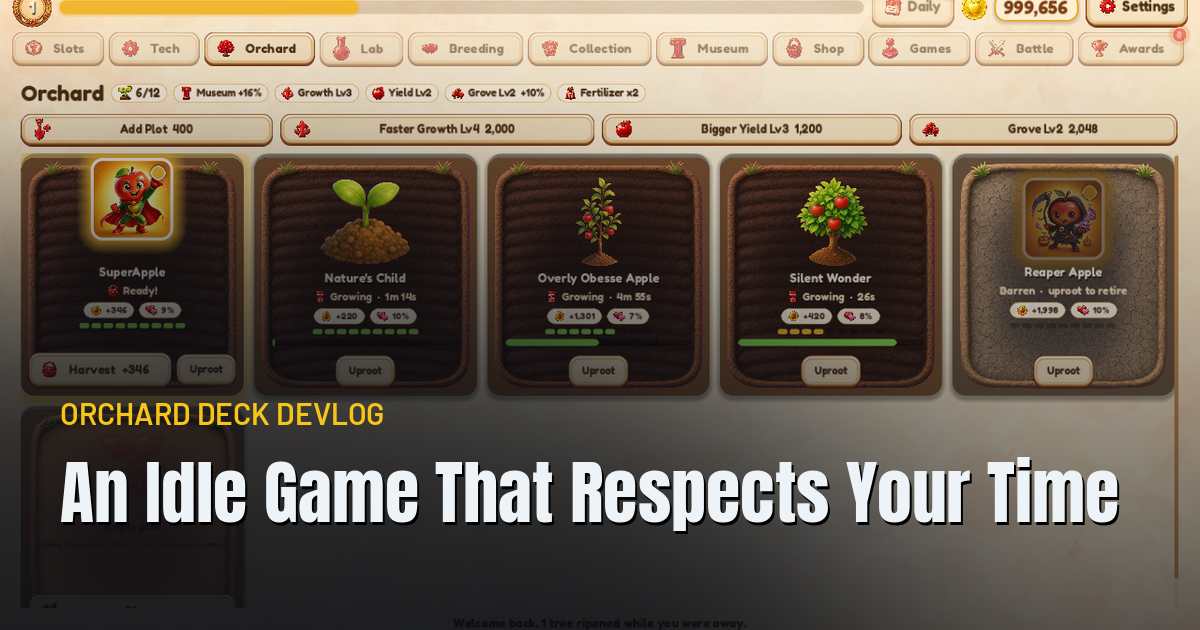
Orchard Deck is a cozy collectathon with no purchases and no dark patterns. Here is how I paced an idle game with overlapping clocks so there is always one small thing worth doing, without ever nagging the player.
Ten arcade minigames inside Orchard Deck without turning it into a grind. Entry fees, payouts, once-per-day rewards, and level gating that keeps them optional.
How I built breeding in Orchard Deck, where fusing two cards consumes both parents for a rarer child, and why the destructive cost is the point.
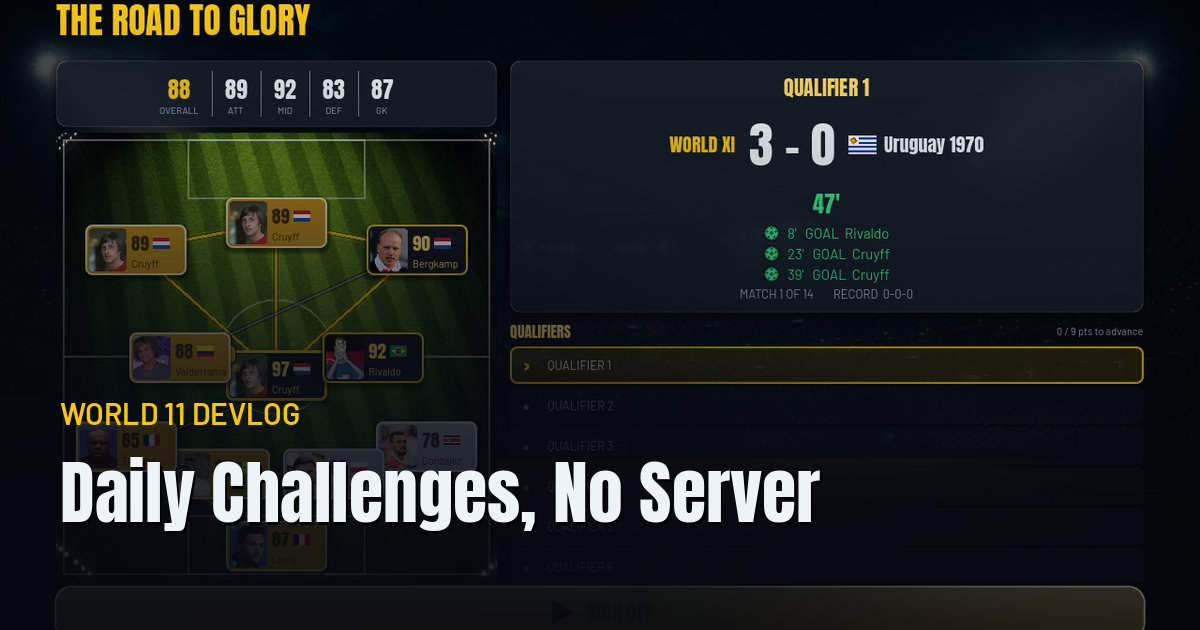
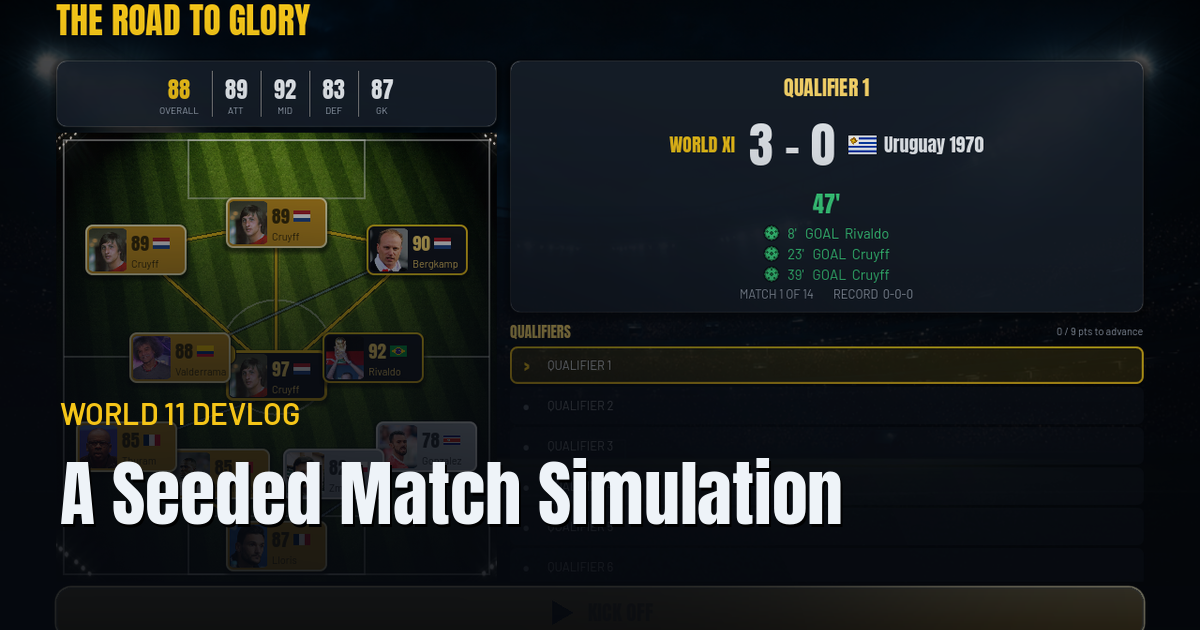
A deterministic, seeded simulation gave my draft game a daily challenge and shareable challenge links for free, with no backend at all. Here is how a single integer unlocks both.
I have no QA team, so I built a headless smoke suite in Godot that instances every scene, round trips saves, sweeps 300 battle seeds, and enumerates the slot odds.
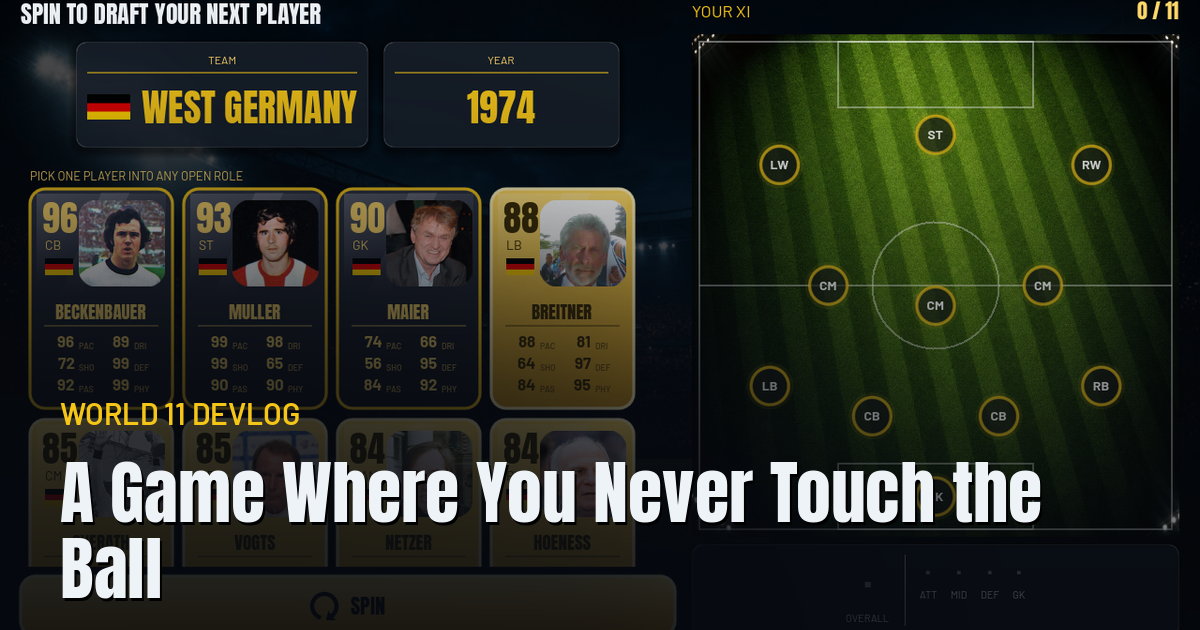
World 11 is a football game with no passing, shooting, or defending. You draft a team and watch the result. Here is why a game about betting instead of playing is so addictive, and how the draft loop works.
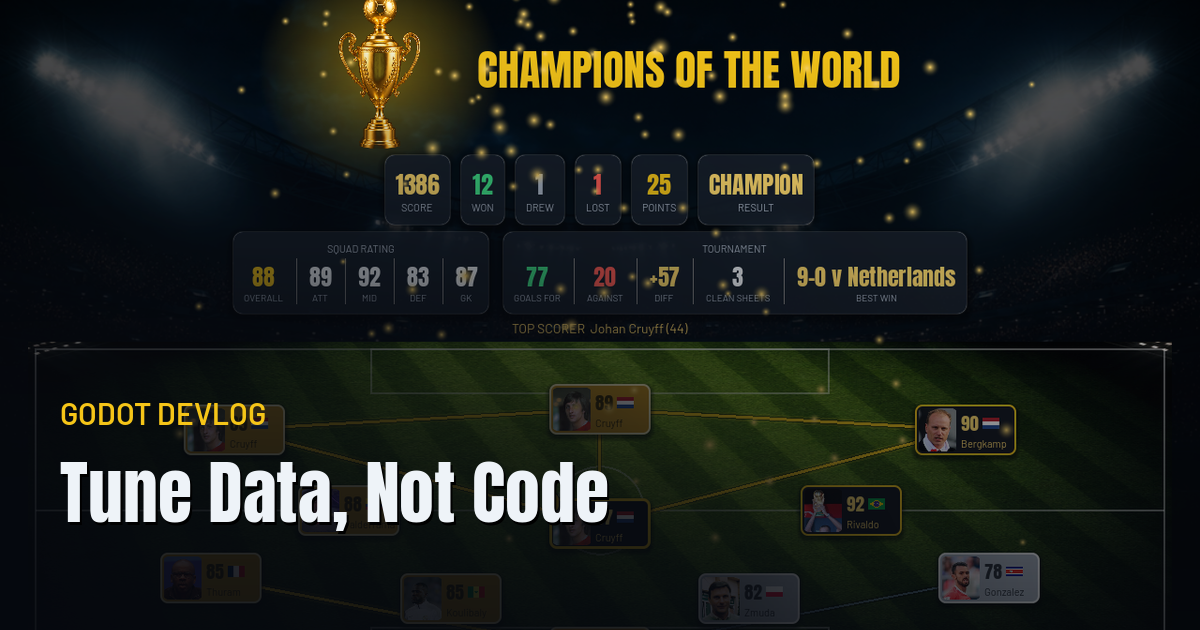
All of World 11's balance lives in data files. Tuning the difficulty means editing JSON and rerunning, never touching the simulation. Here is why that split matters.
A practical guide to exporting a Godot 4 game to HTML5 and WebAssembly, hosting it on Cloudflare R2, embedding it in a page, and the COOP and COEP thread gotcha.
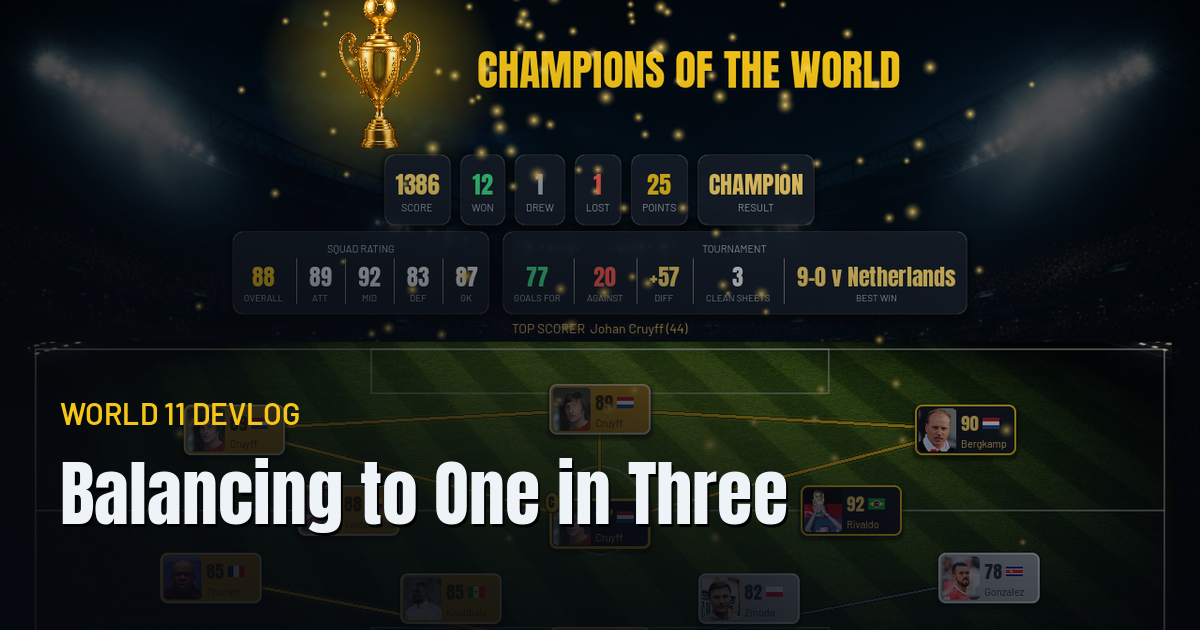
My draft roguelike was too easy. A strong team won the cup two-thirds of the time, so winning meant nothing. Here is how I stopped guessing and tuned it to a real one-in-three with a few hundred simulated runs.
Facts are not copyrightable. Here is the practical line a solo developer can walk to ship a game using real names, positions, and years, with freely licensed faces.
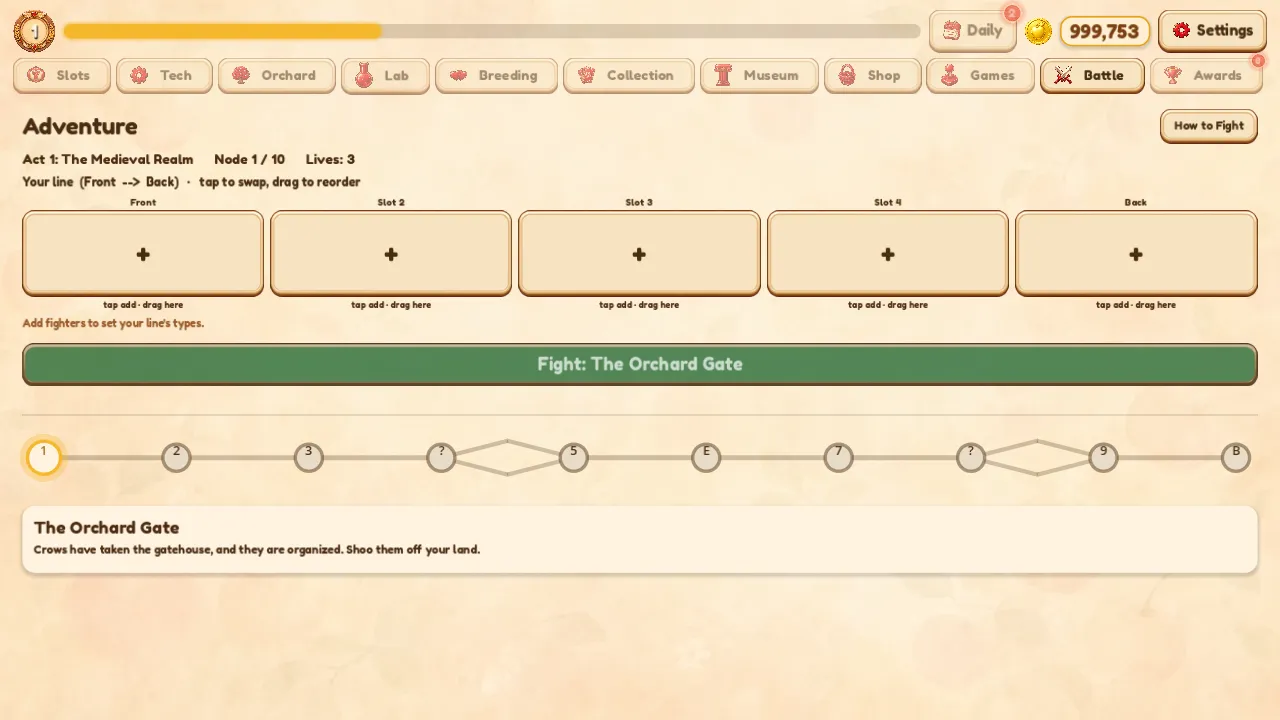
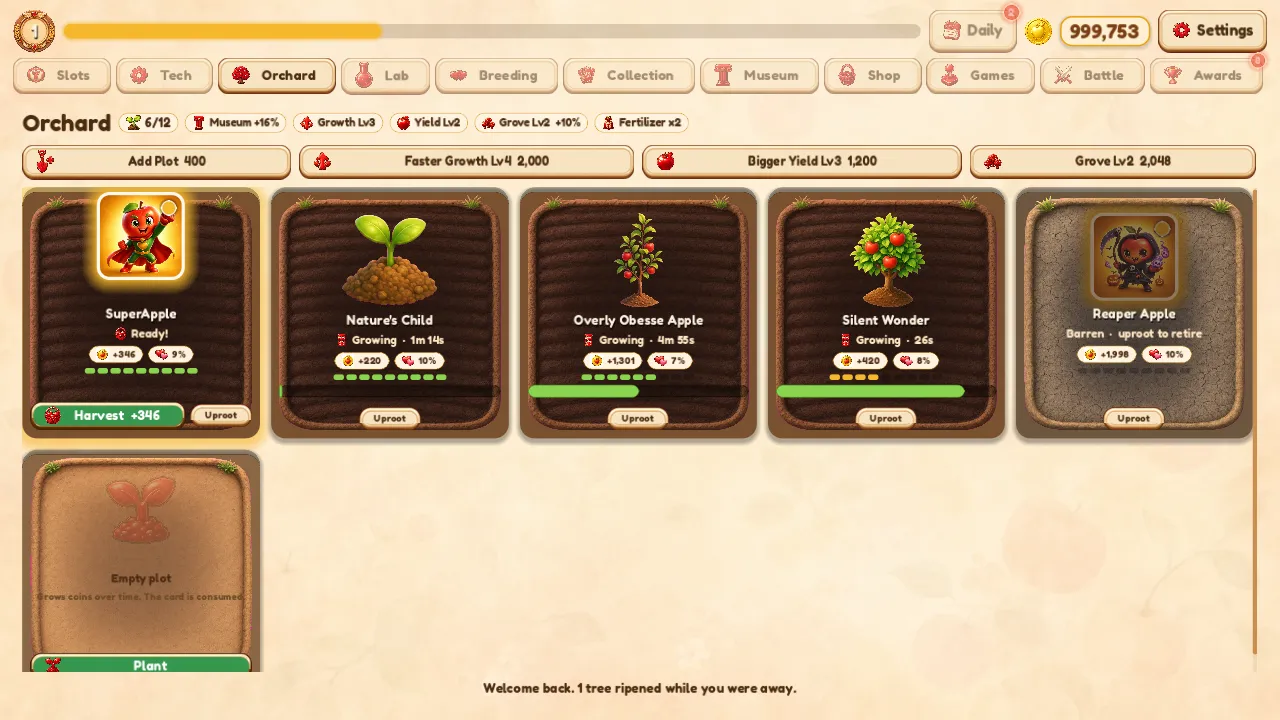
Orchard Deck has six interlocking systems where every output feeds another input. Here is how I designed slots, orchard, museum, lab, breeding, and campaign to feel deep.
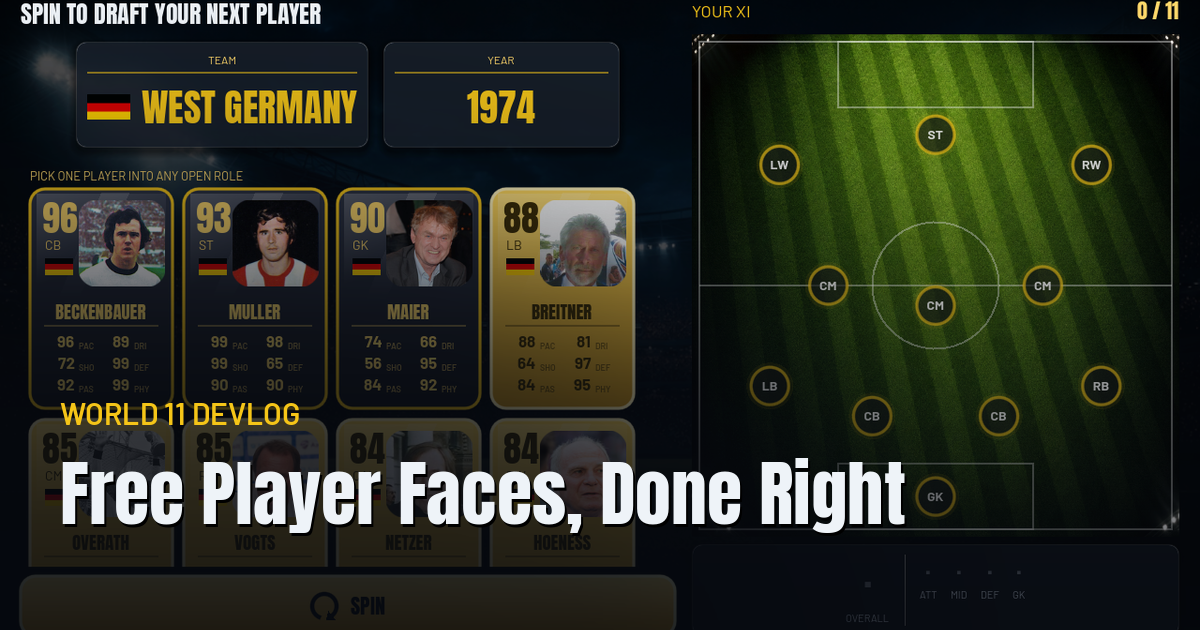
I wanted real footballer photos on the cards in my draft game, free-licensed only. The fetch was easy. Not shipping the philosopher Socrates instead of the footballer was the hard part. Here is the pipeline and the disambiguation fix.
A pure deterministic seeded simulation with no node dependencies turned a roguelike into something testable, with daily challenges and shareable links and no backend.
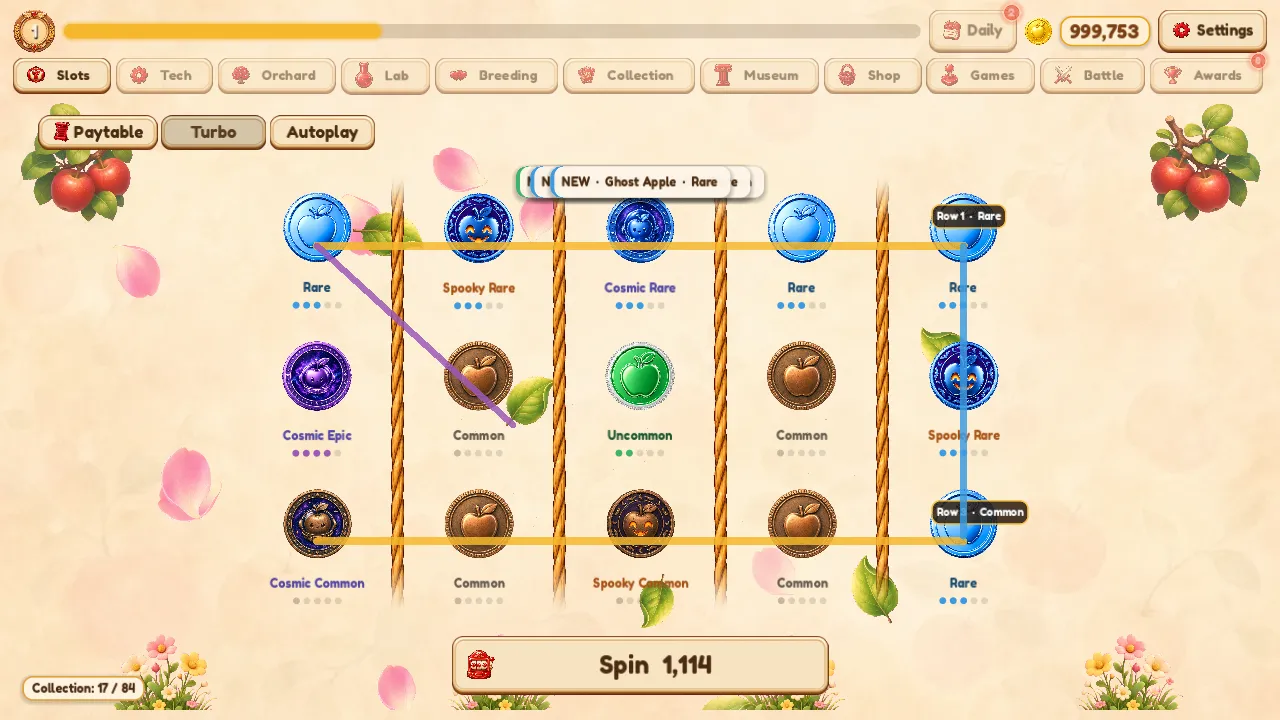
Orchard Deck is built around a slot machine, but there are no purchases and one in-game currency. Here is how I designed the odds to reward players without exploiting them.
Players draft the team but never play the match, so the simulation has to feel fair. Here is the possession-and-event model behind World 11, why it is deterministic from a single seed, and what that buys you for free.
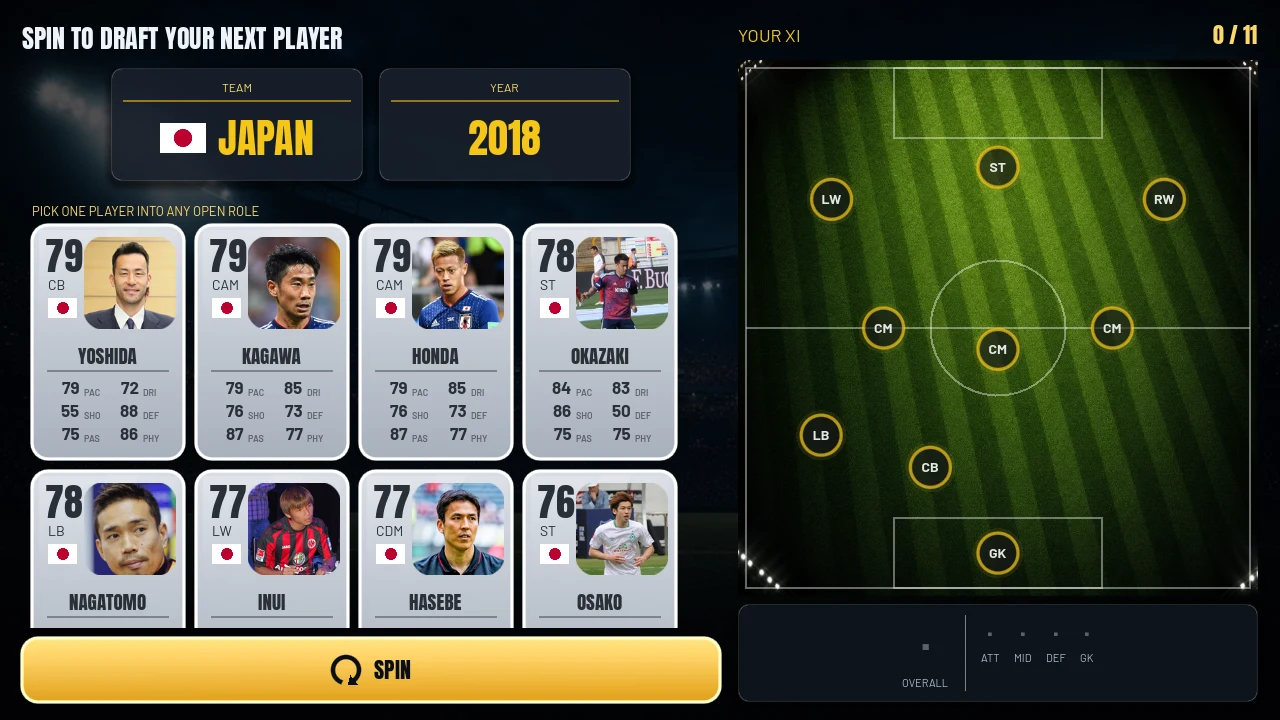
World 11 is a World Cup draft roguelike built solo in Godot 4. Spin a nation and year, draft real legends, and sim a fourteen match gauntlet.
Orchard Deck is a complete cozy collectathon built solo in Godot 4 and shipped as a free browser game. Here is the stack, the systems, and why a web build changed everything.
Everyone says solo game dev is impossible. Then you look at Stardew Valley. Here's the realistic breakdown of building games alone in 2025.