Designing an Idle Game That Respects Your Time
Orchard Deck is a cozy collectathon with no purchases and no dark patterns. Here is how I paced an idle game with overlapping clocks so there is always one small thing worth doing, without ever nagging the player.
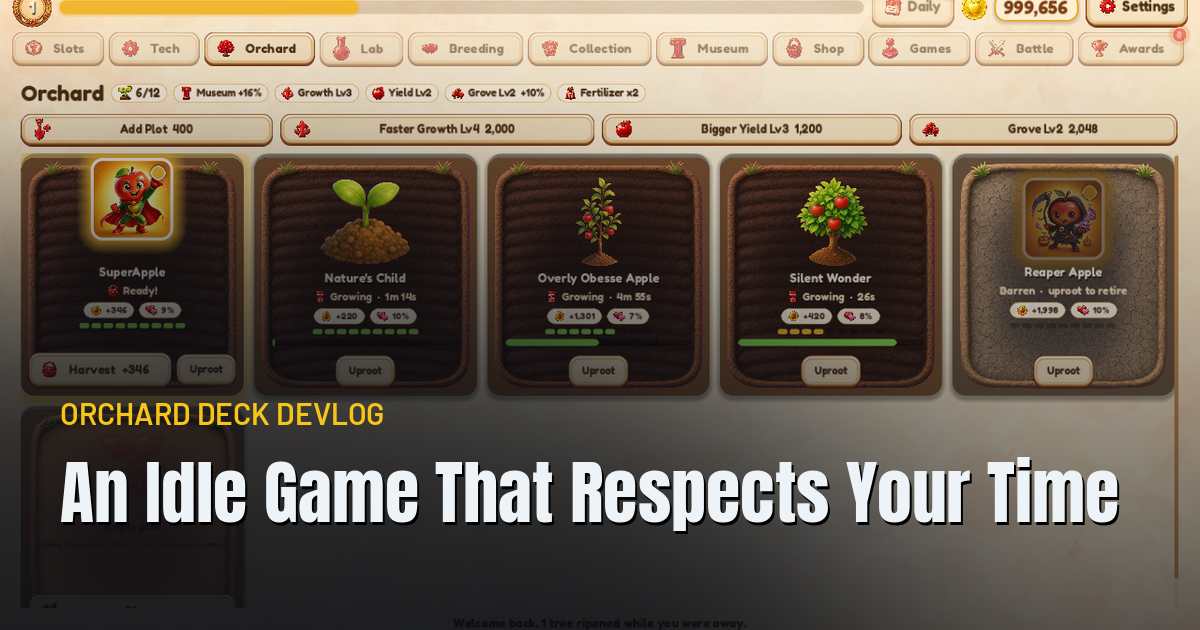
I built a small game on nights and weekends called Orchard Deck. It is a cozy card collectathon you can play free in your browser, made in Godot 4. You spin a slot machine for chibi apple cards, plant them in an orchard for idle coin income, donate full sets to a museum for permanent boosts, breed cards in a lab to chase new ones, and fight a three act campaign when you want the collection to actually do something. There is one currency, coins, and you earn all of it by playing. Nothing is for sale. There are no purchases of any kind.
That last part was not a marketing decision. It was a design constraint, and it ended up shaping everything about how the game feels.
The Failure Mode Is Drifting, Not Boredom
When people warn you about idle games, they usually talk about boredom. I think that misses the real risk. The danger is not that a cozy game gets boring in the moment. It is that someone puts it down on a Tuesday, has a perfectly nice week, and simply never feels a reason to come back. There is no dramatic exit. The game just quietly falls off the edge of their attention and stays there.
I started calling that drifting. A drifting player is not angry. They have no complaint to leave you. They are just gone, and you never find out why because from the inside it felt like nothing happened at all.
So the whole design question became simple to state and very hard to answer. How do I make sure there is always one small reason to open Orchard Deck, without ever making the game feel like it is grabbing at the player's sleeve.
Why Urgency Was Off The Table
The obvious fix is urgency. Most games solve drifting by manufacturing pressure. Your crops are about to wilt. Your energy is full and overflowing means waste. Your event ends in four hours. Come back now or lose something.
That works, and I hated all of it. Urgency is the opposite of cozy. The second a game makes me anxious about a timer, I stop relaxing and start managing a chore. Coziness and urgency cannot share a room. I wanted Orchard Deck to be a place you return to because it is pleasant, not because you are afraid of losing progress while you sleep.
So urgency was banned from the start. Which meant I could not lean on the one tool the entire genre uses to keep people coming back. I had to find another way to keep the game present in someone's life.
Overlapping Clocks Instead of One Loud Alarm
The answer I landed on was to give the game several different pulls on attention, each running on a completely different clock. No single one of them is loud. None of them is an alarm. But because they tick at different speeds, they almost never all go quiet at the same time. When you check in, at least one of them usually has something small and pleasant waiting.
I think of it like a few clocks on a wall, all set to different rhythms. One ticks in minutes, one in days, one in weeks, one whenever you feel like it. You glance up and one of them has landed on something. That is the entire trick, and it took far longer to tune than it sounds.
Here is how each clock works.
The Orchard Runs On A Wall Clock
The orchard is the fast clock. You plant cards and they generate coins over real time, so a harvest is always quietly accumulating whether the game is open or not. Come back after a few hours and there is a little pile of coins to collect. Come back after a day and there is a bigger one.
The key word is accumulating, not expiring. Your harvest never spoils, never caps in a punishing way, never punishes you for leaving. It just sits there being slightly more rewarding the longer you were gone. That flips the usual idle relationship. Instead of returning out of fear that you wasted output, you return to a small gift. The orchard is the reason a two minute check in always pays off.
The Museum Is A Slow Completion Drive
The museum runs on a much slower clock, and it is built around a different feeling entirely. You donate complete sets of cards for permanent boosts, and completing a set is not something you finish in one sitting. It is a collection goal that deliberately outlasts a single session, often by a long way.
This is the clock that gives the game a horizon. The orchard answers what is there for me right now. The museum answers what am I slowly working toward. You can be missing two cards from a set for days, and that gentle gap in the collection is a reason to keep spinning and breeding. It pulls without pushing, because there is no deadline on it at all. It just sits there being incomplete in a way your brain quietly wants to fix.
Daily Quests Are A Reason To Open Today
The daily quests run on a twenty four hour clock, and their job is the most specific of all. They exist purely to answer one question. Why open the game today rather than some other day.
They are small. Spin a few times, harvest the orchard, breed a card. Nothing that demands a long session, nothing you lose by skipping. A skipped day costs you nothing permanent. But on the day you do open the game, the quests give that visit a tiny shape and a tiny payoff, so opening Orchard Deck for five minutes feels like it completed something rather than just poking at it. They are the lightest clock and the one most directly aimed at the drifting problem.
The Campaign Is For When You Want To Do Something
The campaign runs on no clock at all, and that is the point. It is a three act fight you take on when you actually want to do something with the collection you have been building, rather than just tending it.
The orchard, museum, and quests are all about maintenance and slow growth. The campaign is the release valve. When you have a deck you are proud of, the campaign is where you get to spend it on a real challenge with a beginning and an end. It is the clock you wind up yourself, on your own schedule, when the mood strikes. Having it sit there waiting, with no timer and no pressure, means there is always a bigger thing to graduate toward whenever you are in the mood for it.
None Of Them Urgent, All Of Them Present
Lay those four clocks next to each other and the design thesis becomes visible. The orchard pays out on a wall clock, so a harvest is always waiting. The museum is a slow completion drive that outlasts any session. The daily quests give a reason to open today specifically. The campaign is there for when you want to act rather than tend.
Not one of them is urgent. You can ignore any single clock indefinitely and lose nothing you cannot get back. But because they run at different speeds, the odds that every clock is simultaneously empty are very low. There is almost always one small thing worth doing. And small is the whole point. The game asks for a few minutes and gives a few minutes back. It never asks for a marathon and never punishes a gap.
The Hard Part Was The Part Nobody Sees
I want to be honest about the cost of this, because it is the least glamorous engineering I did on the whole project. Tuning overlapping clocks so they keep the game present without ever tipping into nagging was by far the hardest problem, and almost none of that work is visible in the finished game.
If the orchard pays too fast, the slow clocks stop mattering and the museum becomes irrelevant. If it pays too slow, a check in feels empty and you have recreated drifting. If the daily quests demand too much, they become a chore and the coziness is gone. If they ask too little, opening the game feels pointless. Every clock affects every other clock, and the only way to find the balance was to play the game across real days and real gaps, then nudge a number, then wait and feel it again. There is no clean unit test for whether a game respects your time. You just have to keep living with it until the rhythm stops bothering you.
Why The No Purchases Rule Helped
The thing that made all of this honest was the constraint I started with. A lot of idle and gacha games monetize impatience directly. They build the friction on purpose, then sell you the way around it. The dark pattern is not a bug in those games, it is the product.
Because nothing in Orchard Deck is for sale, I had no escape hatch and no incentive to build one. The only cost the game can ever charge is your time. That forced the pacing to feel genuinely good on its own merits, because there was no checkout page to paper over a loop that was secretly annoying. If a clock felt bad, the only fix was to make it feel good. I could not sell my way out of a problem, so I had to design my way out of it instead. That constraint, which looked like a limitation, turned out to be the thing that kept the whole game kind.
You can play Orchard Deck free in your browser at games.kevingabeci.com. Plant a few cards, spin a few times, and come back whenever you feel like it. That is the entire idea.
Like this? You'll like what I'm building too.
Two ways to support and get more of this work.
HEARTH
A privacy-first Life OS for your desktop. Journal, tasks, and notes that stay on your machine. Coming soon, direct download from this site.
Read moreMY TOOLKITS
Receipts-first toolkits for shipping after hours, building Claude agents, publishing on Amazon, and more. The exact methods I used, not theory.
Browse on WhopRelated Articles
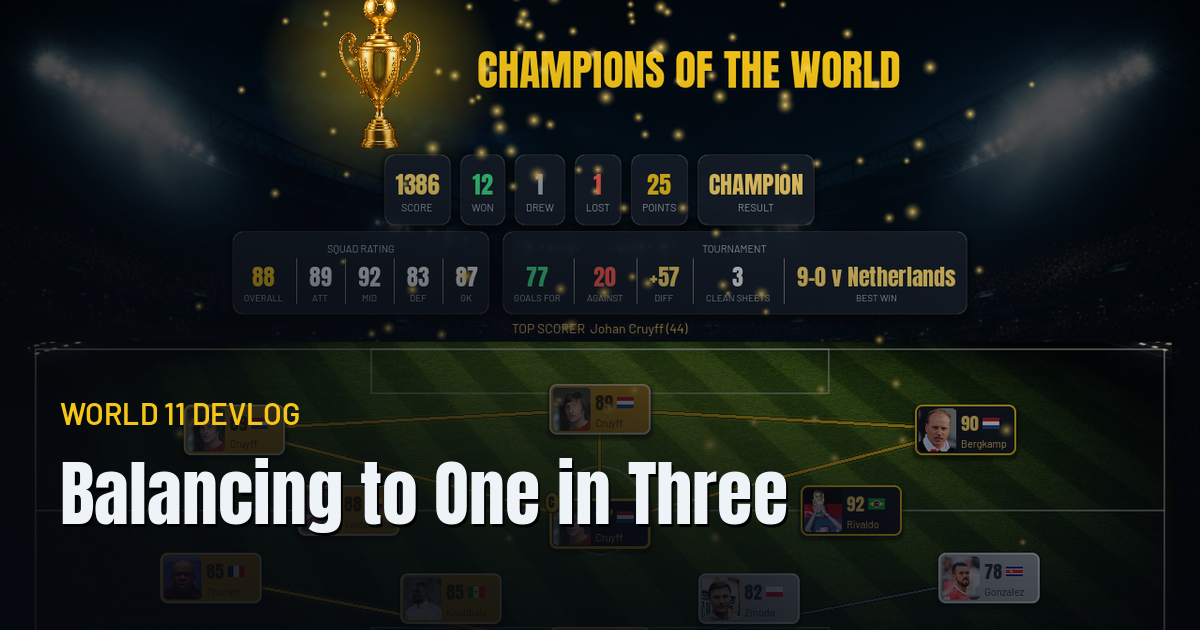
Balancing a Roguelike to a One-in-Three Win Rate With a Headless Harness
My draft roguelike was too easy. A strong team won the cup two-thirds of the time, so winning meant nothing. Here is how I stopped guessing and tuned it to a real one-in-three with a few hundred simulated runs.
What Building Small Games on Nights and Weekends Taught Me
I keep my games small on purpose. Here is what shipping little, finished, free browser games in Godot, instead of chasing one big dream project, has taught me about scope, momentum, and actually finishing.
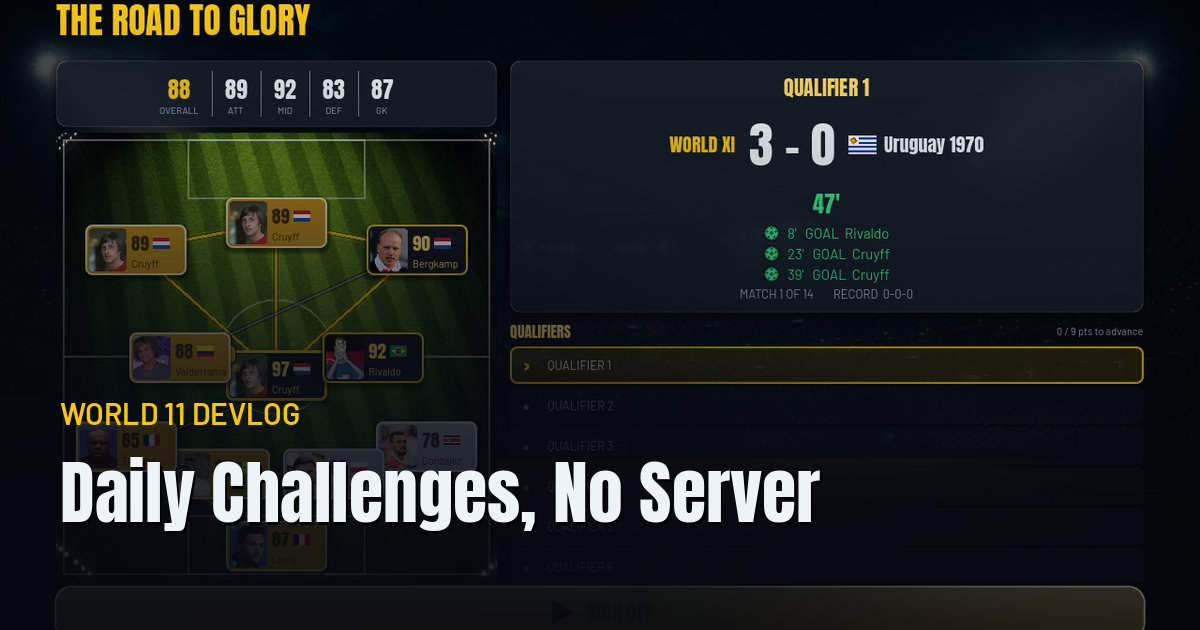
Daily Challenges and Shareable Seeds, No Server Required
A deterministic, seeded simulation gave my draft game a daily challenge and shareable challenge links for free, with no backend at all. Here is how a single integer unlocks both.