Building Reasons To Come Back Without Manipulating Players
How I built daily return hooks into Orchard Deck without dark patterns. Three quests from different systems, a seven-day login streak, and a rotating daily shop.
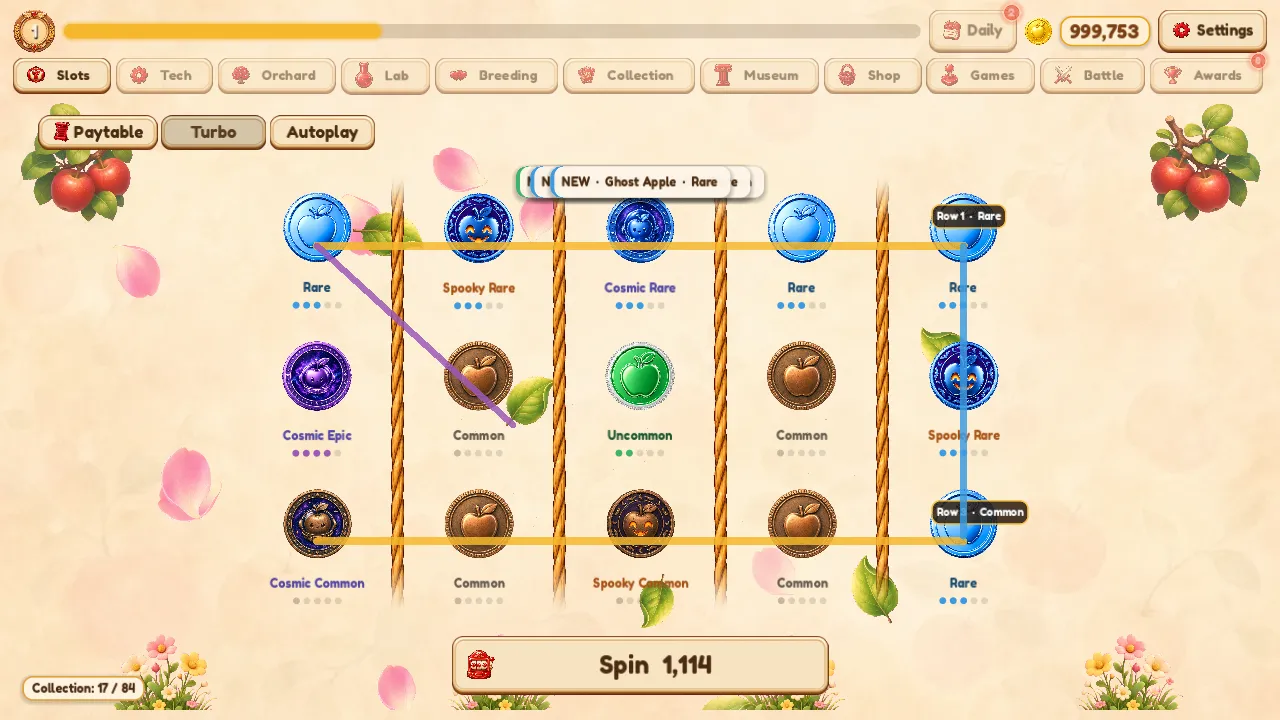
Retention is the most poisoned word in game design. The moment you say you want players to come back, you are standing next to every manipulative trick the free-to-play industry ever invented, the streaks that punish you for missing a day, the timers built to make you anxious, the shops engineered to make you buy something before it vanishes forever. Orchard Deck is free, has a single currency, and sells nothing, so I have no commercial reason to deploy any of that. But the design question is still real. I want a player who enjoyed the game on Monday to have a reason to open it again on Tuesday, and I want that reason to be a gift rather than a hook in the cheek.
So I gave myself a rule. Every return mechanic has to make the game more generous, not the player more anxious. If a feature works by creating a fear of missing out, by punishing absence, or by manufacturing pressure, it does not ship. A return hook is allowed to offer the player something good for showing up. It is not allowed to make them feel bad for staying away. That line, generous versus anxious, is the whole ethic, and it shaped all three of the daily systems.
Play Orchard Deck in your browser
Three Quests From Three Different Systems
The first return hook is daily quests, and there are three of them refreshed each day. The obvious way to build daily quests is to pull three tasks from a flat list, but I do something more deliberate. The three quests are drawn from different system buckets, so you never get three quests that all live in the same corner of the game. One might be about the slot machine, one about the campaign, one about the orchard or a minigame. They come from separate parts of the game by design.
The reason is a tour, not a checklist. A player settles into a groove and stops exploring. They find the slot machine fun and they live there, and a whole campaign and an arcade and a museum sit unvisited. Three quests from three different buckets are a gentle invitation to touch parts of the game you have been ignoring. The quest does not nag you to go to the campaign. It just offers a reward if you happen to play a fight today, and that small offer is often enough to get a slot-machine player to wander into the campaign and discover they like it. The quests are a daily guided tour of your own game, and the spread across systems is what makes it a tour instead of a treadmill.
The crucial restraint is that nothing happens if you skip them. There is no penalty for an unfinished quest, no streak of quests to break, no escalating guilt. You missed today's quests, which means you missed three small bonuses, and tomorrow there are three fresh ones. The quests are pure upside on the days you do them and a quiet non-event on the days you do not. That is the generous-not-anxious rule made concrete.
A Login Streak That Only Rewards
The second hook is a seven-day login streak, and the login streak is the single most abused mechanic in the entire industry, so it got the most scrutiny. The toxic version of a login streak works by loss aversion. You build up a long streak, the game makes the streak feel precious, and then it threatens to reset that streak to zero if you miss a single day. The whole engine runs on fear. You log in not because you want to play but because you are afraid of losing the number, and that fear is the product.
I kept the streak and threw out the fear. The Orchard Deck streak is seven days long and it only ever rewards you. Each day you log in across the week, you collect that day's reward, with the rewards growing toward a payoff at the end of the seven. What it does not do is punish. Missing a day costs you that day's reward, which you simply were not there to collect, and the streak rolls on rather than detonating your progress. There is no precious number hanging over your head that a single absence destroys. The streak is a week-long sequence of gifts you collect at your own pace, and the worst case for missing a day is that you did not get a gift that day. You lost nothing you had. You declined a present you were not home to receive.
The difference sounds subtle and it is total. A punishing streak makes the player serve the game. A rewarding streak makes the game serve the player. One produces a daily spike of low-grade dread. The other produces a small daily pleasure. They look almost identical on a feature list and they are opposite things to live with, and which one you build comes down entirely to whether a missed day takes something away or simply offers nothing.
A Rotating Shop That Refreshes For Free
The third hook is a rotating shop with five slots that refresh once a day, and the shop is where free-to-play games hide their worst instincts, so this one needed the clearest line of all. The manipulative shop runs on artificial scarcity and a clock. A rare item appears, a countdown starts ticking next to it, and the game pressures you to grab it before it is gone forever. The timer is not there to organize the inventory. It is there to override your judgment with urgency, to make you spend before you have decided you want to.
The Orchard Deck shop rotates for a completely different reason, which is freshness. Five slots, refreshed daily, so there is something new to look at when you open the game tomorrow. The currency is the same coins you earn by playing, and nothing in the shop costs real money, because the game sells nothing at all. The rotation is not a scarcity trap. It is a way to keep the shelf interesting across many days, so a returning player has a fresh window to browse rather than the same five things they saw last week. If you miss something good in today's rotation, that is genuinely fine, because the shop is stocked from the same pools you can reach through normal play, and a fresh set arrives tomorrow regardless.
There is a paid reroll, and I want to be precise about it because a reroll is exactly the kind of thing that can become a trap. The reroll costs in-game coins, never money, and it exists to serve the player who wants agency over the shelf. You opened the shop, none of the five slots interest you, and instead of waiting a full day you can spend some of your earned coins to roll a new set right now. That is a convenience the player chooses to buy with currency they earned, not a pressure the game applies. The reroll gives the player more control over the shop. It does not give the shop more control over the player.
The Loop That Respects The Player
Stacked together, these three hooks form a daily loop. You open the game, your quests are fresh and pull you toward a corner you might have skipped, your login reward is waiting to be collected, and the shop has rotated to something new. That is three good reasons to be glad you came back, and not one of them works by making you afraid of being away. A player who skips a week loses nothing they earned. They simply pick up a fresh set of gifts whenever they return. The loop is a series of open invitations, and an invitation you can decline without consequence is the opposite of a trap.
I believe a free game that respects the player is rare enough to be a feature in itself, and that the absence of dark patterns is something an attentive player can feel even if they could not name it. There is a feedback button right on the game page. If any of these daily systems ever feels like pressure rather than a gift, if a streak ever makes you anxious or a shop ever makes you feel rushed, that is a failure of the one rule I built all of this around, and it is exactly the report I most want to receive.
Like this? You'll like what I'm building too.
Two ways to support and get more of this work.
HEARTH
A privacy-first Life OS for your desktop. Journal, tasks, and notes that stay on your machine. Coming soon, direct download from this site.
Read moreMY TOOLKITS
Receipts-first toolkits for shipping after hours, building Claude agents, publishing on Amazon, and more. The exact methods I used, not theory.
Browse on WhopRelated Articles

Balancing a Roguelike to a One-in-Three Win Rate With a Headless Harness
My draft roguelike was too easy. A strong team won the cup two-thirds of the time, so winning meant nothing. Here is how I stopped guessing and tuned it to a real one-in-three with a few hundred simulated runs.
What Building Small Games on Nights and Weekends Taught Me
I keep my games small on purpose. Here is what shipping little, finished, free browser games in Godot, instead of chasing one big dream project, has taught me about scope, momentum, and actually finishing.

Daily Challenges and Shareable Seeds, No Server Required
A deterministic, seeded simulation gave my draft game a daily challenge and shareable challenge links for free, with no backend at all. Here is how a single integer unlocks both.